



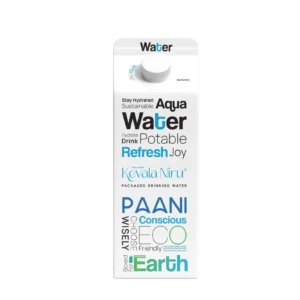
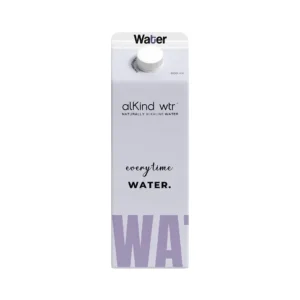


The sustainability discourse in the world has created a sharp focus on the packaging decision, notably in the beverage sector whereby single-use plastic has reigned over the decades. Paper packaging is also becoming an alternative to plastic water-sealed water-tight packaging, as environmental issues and the concept of environmental friendliness continue to increase. The trend of environmentally conscious consumption has left a large number of people doubting conventional approaches, and more people are becoming aware of why paper packaging is superior to plastic. This transformation does not solely involve minimizing waste but also implementing solutions that would be in line with long term environmental responsibility.
Paper packaging is wholly based on renewable resources and thus a complete contrast to plastic, which is based on fossil fuels. Responsibly sourced paperboard is used to make sure that natural resources are used in a sustainable manner, and reforestation and conservation are critical factors. The paper packaging can have a major advantage due to this renewable nature, as it will involve a regeneration cycle of packaging instead of depletion. On the contrary, manufacturing of plastic depends much on the non-renewable resources which further adds to the degradation and pollution of the environment with carbon.
Among the most notable reasons, why paper packaging outweighs plastic, is the effects of using it on this planet. Paper packaging is environmentally friendly and can degrade and be destroyed in favor of time, eliminating the massive use of the landfill and ecosystem. Plastic instead may require hundreds of years to break down, usually breaking down into microplastics, which contaminate both soil and water. Such microplastics are highly dangerous to wildlife and human lives, and integrating paper-based packaging is a vital journey to a cleaner world.
The argument in favour of paper packaging is also enhanced by its recyclability. The majority of the paper-based can be recycled numerous times, which creates a circle of economy in which resources are efficiently reused. Paper packaging recycling uses less energy than manufacturing new plastic, which will aid in the overall reduction of the carbon footprint. Regardless of geographic areas, the composition of the paper packaging is relatively simple, and it is therefore easier to process in comparison to the multi-layered plastic products.
The other reason that points out why paper wrapping is superior to plastic is that it has a smaller carbon footprint when manufactured and discarded. The technological improvement in manufacturing has made possible the creation of energy-saving processes, which emit only a little. The environment is also in favor of carbon-neutral practices by many companies, which increases the sustainability of paper packaging much more. Comparatively, plastic production entails energy-consuming processes, which emit a lot of greenhouse gases, which contribute to climate change.
This shift also has health and safety considerations. Beverage packaging typically has food grade coatings such that the contents are not spoilt or contaminated. Contrary to some plastics that might leech poisonous substances in certain circumstances, paper packaging is designed in such a way that it is able to sustain the purity of the product. This will make it a strong option of consumers that are concerned about health and environmental responsibility.
Paper packaging is also attractive and useful, which contributes to its popularity. It has a natural and high quality appearance that appeals to contemporary consumers who believe in sustainability. The feel and look of paper packaging gives an impression of reality, which makes a powerful branding tool to businesses that are interested in communicating their desire to be environmentally friendly. Moreover, paper packaging is light and convenient, it is easy to carry and not to lose its strength.
Kevala Niru is the next generation of sustainable packaging as it is packaged drinking water, natural mineral water, and alkaline water in gable top paper cartoons made out of plant-based paper. This method opposes the conservatism of using single-use plastic bottles and provides a solution that is both practical and earth-friendly. Selecting paper packaging, Kevala Niru proves that companies should be able to align their business activities with sustainability targets and at the same time provide products of high quality.
The importance of innovation can not be said to be less critical regarding the question about why paper packaging is more preferable than plastic. The extensive research and development have resulted in the development of superior substances that enhance the strength, the barrier properties and recyclability of paper packaging. Such innovations make sure that base on paper solutions can compete with plastic solutions in terms of performance and with higher environmental advantages. Paper packaging also has an improved sustainability profile with the introduction of plant-based coatings and renewable materials.
The consumption patterns are also contributing to the use of paper application. Growing environmental concern has resulted in demand to use products that have less ecological impact. Consumers are actively demanding to find an alternative to plastic and are ready to patronize brands that focus on sustainability. Such change in thinking is pushing firms to reconsider their packaging options and invest in environmentally-friendly solutions.
The analysis of the paper packaging in contrast to plastic packaging points out a larger trend to responsible consumption and manufacturing. Not only is it about substituting one material with another but reevaluating the whole lifecycle of packaging. Out of sourcing and manufacturing, all the way to usage, and even disposal, each step contributes to the environmental impact. Paper packaging is a balanced solution that considers these factors and does not compromise on the support of sustainability targets.


